Should Concealer Match Your Foundation, or Be a Shade Lighter?
Concealer does not need to match foundation exactly. Learn when to match depth and undertone for spot-correcting, when a half-step lighter works for brightening, and the failure signs of both.
The short answer
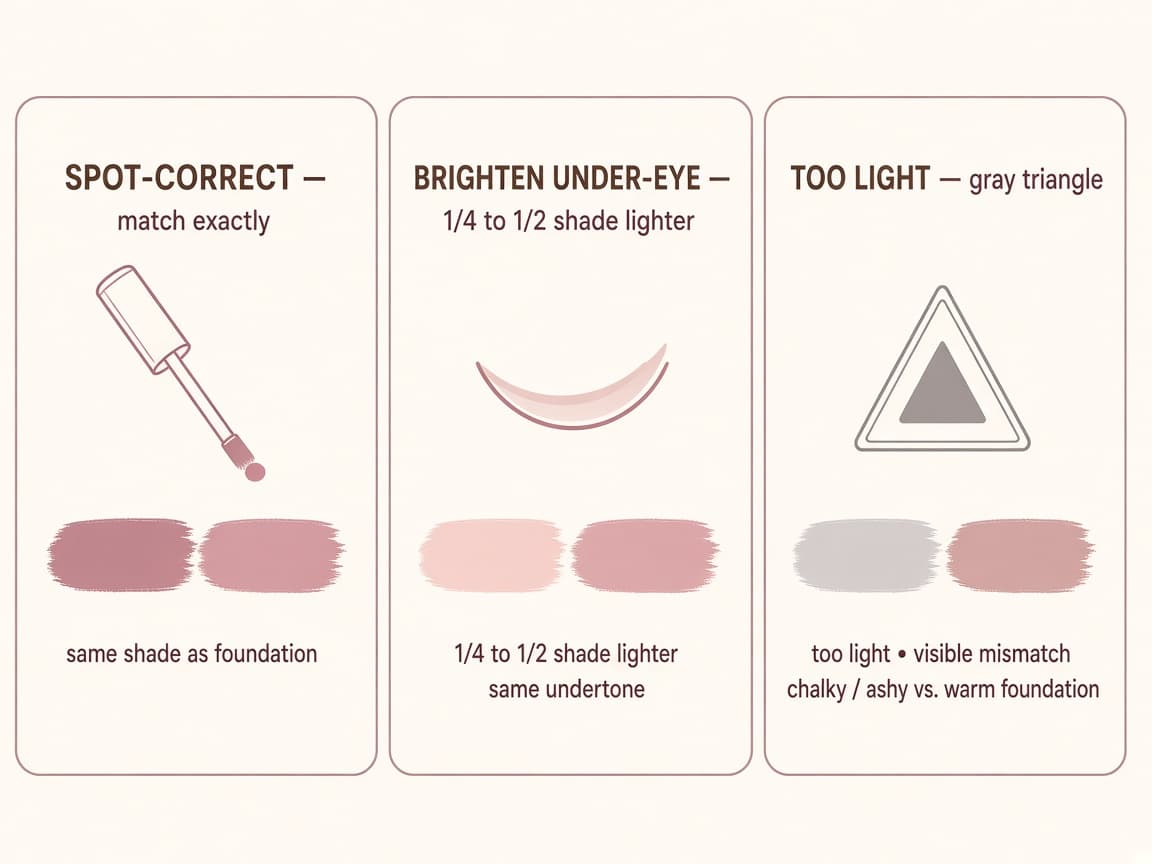
Concealer does not need to match your foundation exactly—it depends on the job. To cover a blemish, redness, or a dark spot (spot-correcting), match concealer as closely as you can to your foundation's depth and undertone. To brighten under the eyes, a shade a quarter- to half-step lighter, in the same undertone family, tends to look more awake without going flat.
The mistake is going further than that. Push past half a shade lighter, or switch undertone families to “brighten,” and it stops looking like skin and starts looking like a gray-white triangle sitting on top of your face, especially in photos.
Why concealer and foundation drift apart
Concealer and foundation are answering two different questions, but most people buy one concealer and expect it to do both jobs. Spot-correcting asks concealer to disappear into your existing base. Brightening asks it to stand out just enough to look like light hitting your face naturally—those are almost opposite goals for the same tube.
Formula also works against a clean match. Concealer usually carries more pigment and less slip than foundation, so it can oxidize or set differently even when the shade name says the same number. Shade numbers do not travel cleanly between brands either: a “Fair 2” from one line is not guaranteed to be the same depth or undertone as a “Fair 2” from another, so pairing a foundation from one brand with a leftover concealer from a different one is a common, invisible source of mismatch.
The most common self-inflicted failure is picking a concealer far lighter than your foundation on purpose, assuming “lighter always brightens.” Past a half-shade, that swatch stops reading as your skin catching light and starts reading as a separate, paler layer—flat in person and worse under flash or overhead photos, where it can flash back gray or ashy-white.
A 5-minute test you can do before you buy
You need your current foundation, one concealer you think matches, and (ideally) one concealer a shade lighter, if you own it. No app required.
1. Swatch your foundation in a thin stripe on your jawline first—this is your reference. 2. Right next to it, swatch the concealer you use for spot-correcting. Wait two to three minutes; some formulas oxidize and shift warmer or deeper as they set. 3. In daylight from a window (not direct sun, and not your bathroom's overhead bulb), check whether the two stripes blend into one continuous color. If the concealer looks pinker, grayer, or more orange than the foundation next to it, the undertone is off even if the depth looks close. 4. Now pat a small amount of your “brightening” concealer under one eye only, blend, and look in a mirror and in an unflashed phone photo. It should look like brighter skin, not a lighter patch with a visible edge. 5. Repeat the daylight check under a warm lamp at night, since that is when you are more likely to actually wear it.
Failure cases to watch for: swatching concealer only on the back of your hand, which often runs a shade or two off from your face; using a peachy or yellow-based concealer over a red blemish on cool-undertone skin, which can leave a muddy, warm halo once it sets; using a pink-based concealer for spot-correcting on warm or olive skin, which can look ashy or slightly purple under fluorescent light; and reaching for an old concealer left over from a previous foundation brand—the number on the tube rarely means the same thing across two lines. If the under-eye stripe reads gray or leaves a visible line in a photo, it is too light or the wrong undertone, not “just needs more blending.”
Where Glowmi fits in
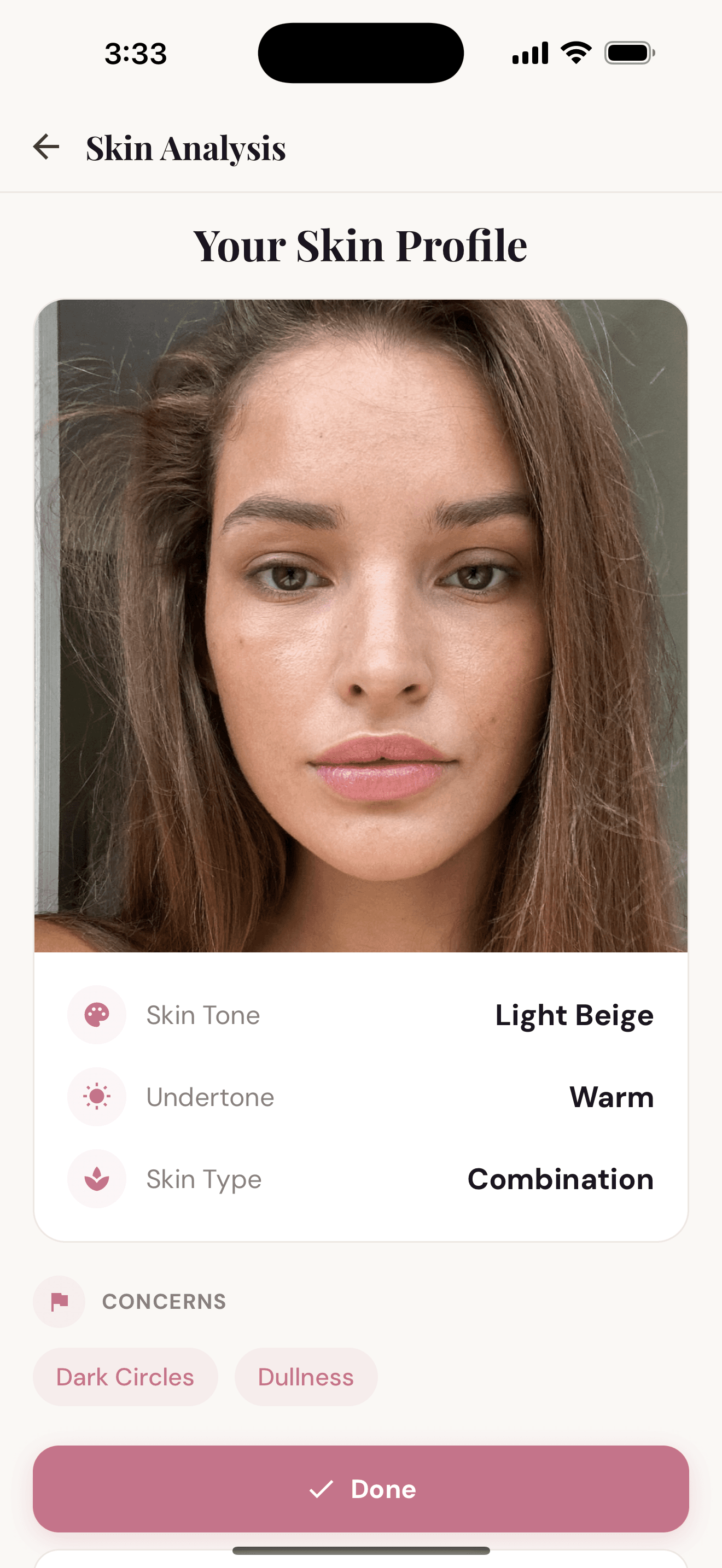
Glowmi's Skin Analysis reads your visible tone and undertone from a bare-face selfie and turns that into a starting brief—an approximate depth and a cool, warm, or neutral undertone family—so you are shortlisting concealer and foundation shades instead of guessing from a wall of options.
It does not replace the jawline and under-eye test above, and it is not a medical diagnosis or a guarantee of one exact bottle across every brand; treat it as a faster starting point, then confirm the actual pick in daylight the way this guide describes. After onboarding, the full analysis and palette experience is part of Glowmi Pro, with fair daily and monthly usage limits and no free trial. Glowmi is iOS only.
Keep reading
How to Find Your Foundation Shade Without Guessing
Match foundation by depth and undertone first, avoid common mismatches, and use Glowmi’s skin analysis as a smarter starting point.
What Is Skin Undertone? A Practical Guide for Makeup
Skin undertone is the cool, warm, or neutral hue under your surface tone. Learn how it differs from skin tone and how to use it when choosing foundation, blush, and lips.
Why Your Foundation Looks Different in Daylight, Store Light, and Flash
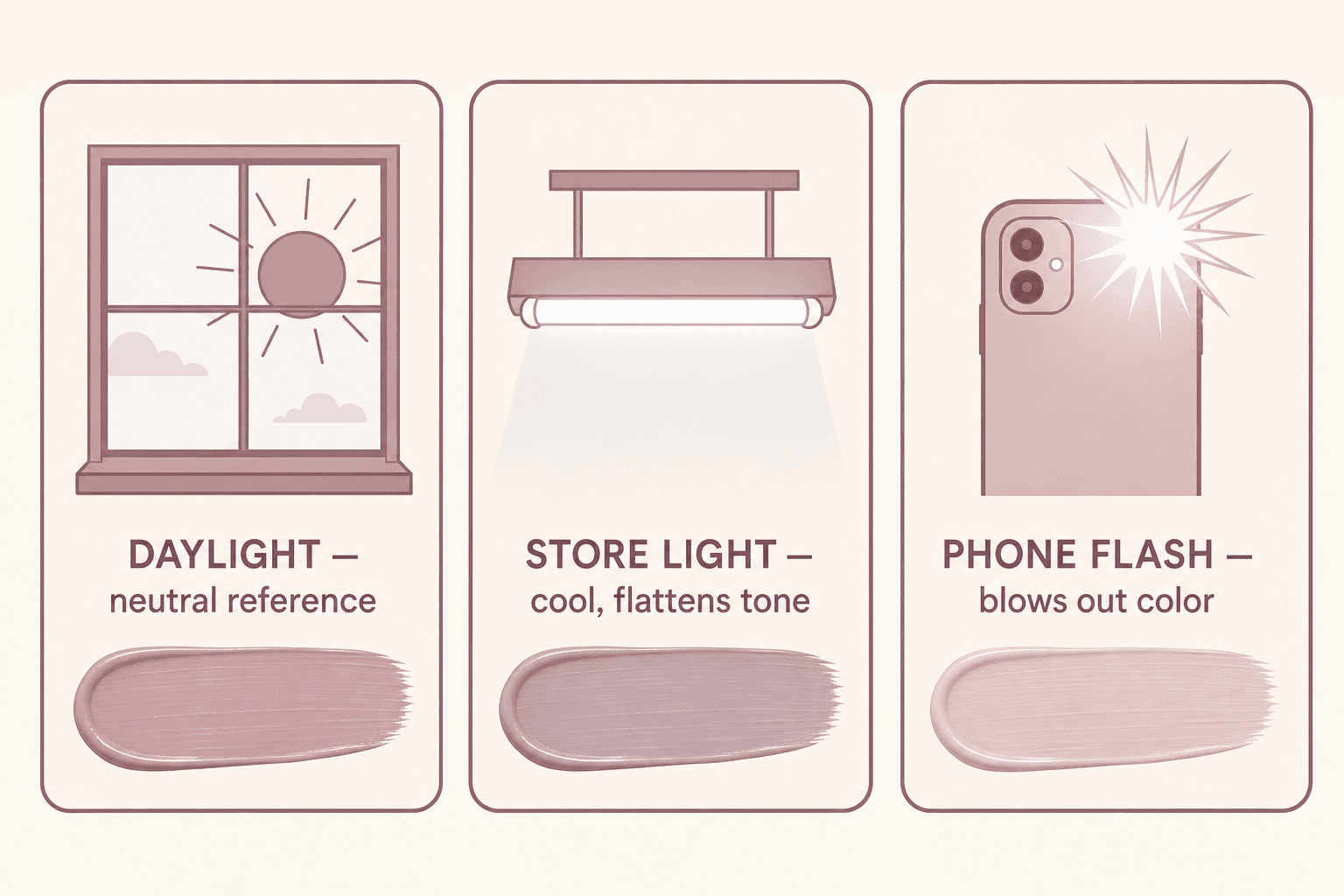
The same foundation can look perfect at home and wrong in the store, or the reverse. Learn why daylight, indoor bulbs, store lighting, and phone flash change how a shade reads, plus a 5-minute test you can do before you buy.