What Is Skin Undertone? A Practical Guide for Makeup
Understand undertone versus skin depth, compare real swatches, and turn mixed results into useful shade notes without relying on one shortcut.
On this page
The short answer
In makeup, undertone describes a color direction used to compare shades, commonly labeled cool, warm, or neutral. Depth is a separate question: how light or deep the color appears. Two people with similar depth may prefer different foundation, cheek, or lip shades.
Treat an undertone label as a shopping hypothesis, not a diagnosis or a rule about which colors you are allowed to wear. The most useful check is how a product looks on the area where you intend to use it.
Why a label can be confusing
Your face may show several colors at once, and a temporary surface change does not automatically describe your entire complexion. A shade that covers one area successfully may still look different beside your neck. Compare the finished result with the areas you want it to connect to.
Brands do not all use letters and names in the same way. M·A·C’s own explanation is a useful example: its naming convention differs from the everyday warm/cool wording used by some other brands. A “neutral” label is therefore not a promise that a shade will suit every person who identifies as neutral.
Compare product colors rather than relying on one shortcut
Wrist veins, jewelry preferences, and white-shirt comparisons can give mixed impressions. They do not test how a specific pigment and formula will sit on your face. Use them, if you enjoy them, as clues to a starting range rather than as proof.
- Start with two or three products at a similar depth, with visibly different color directions. Keep the formula the same for this comparison when possible.
- Apply small amounts to the area you are matching, in the way you would actually wear them. Avoid judging from the container or a hand swatch alone.
- Compare in indirect daylight after the products settle. Ask which blended edge looks least separate from your skin.
- Check again in your usual indoor light. Record a color description such as too peachy, too pink, or close but too deep.
- Repeat only the unresolved part of the comparison. A mixed result is a reason to refine the shade range, not force yourself into a label.
A worked example without a definitive label
Imagine that one base looks too yellow and another looks too pink, while a third is close but slightly dark. You can shop for something near the third color direction at a lighter depth without declaring a permanent undertone category. That observation is already useful.
Likewise, liking silver jewelry does not require you to dislike peach lipstick. Color preference, product sheerness, the surrounding makeup, and the effect you want all play a part. A label should reduce guesswork, not remove choices.
Use the result differently for base and blush
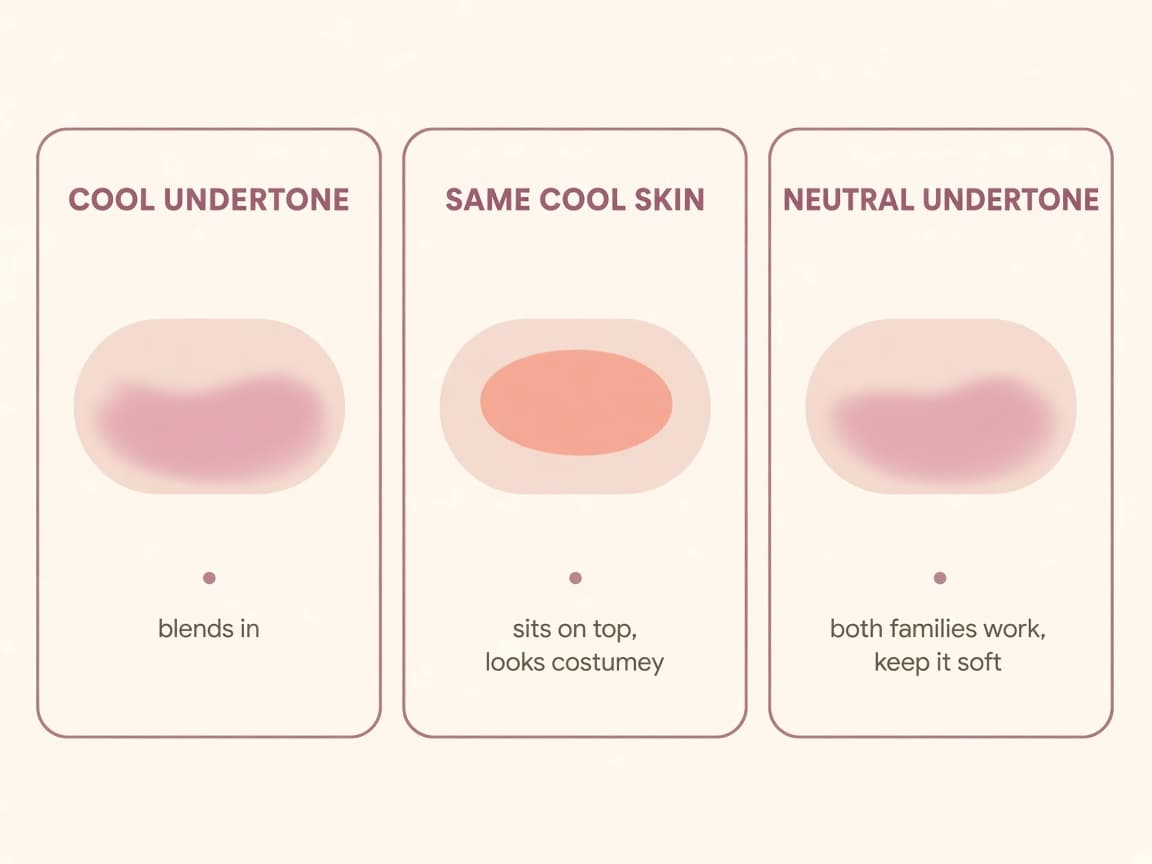
For a base, you may want a shade to blend quietly with nearby skin. For blush or lipstick, you may deliberately choose contrast. Start with the foundation matching method if you want an unobtrusive base, then use the blush comparison to decide how much contrast you enjoy.
When you are ready to coordinate several products, build a personal makeup palette from combinations you have compared on yourself. This is more informative than assuming every product with one temperature label belongs together.
Where Glowmi fits in
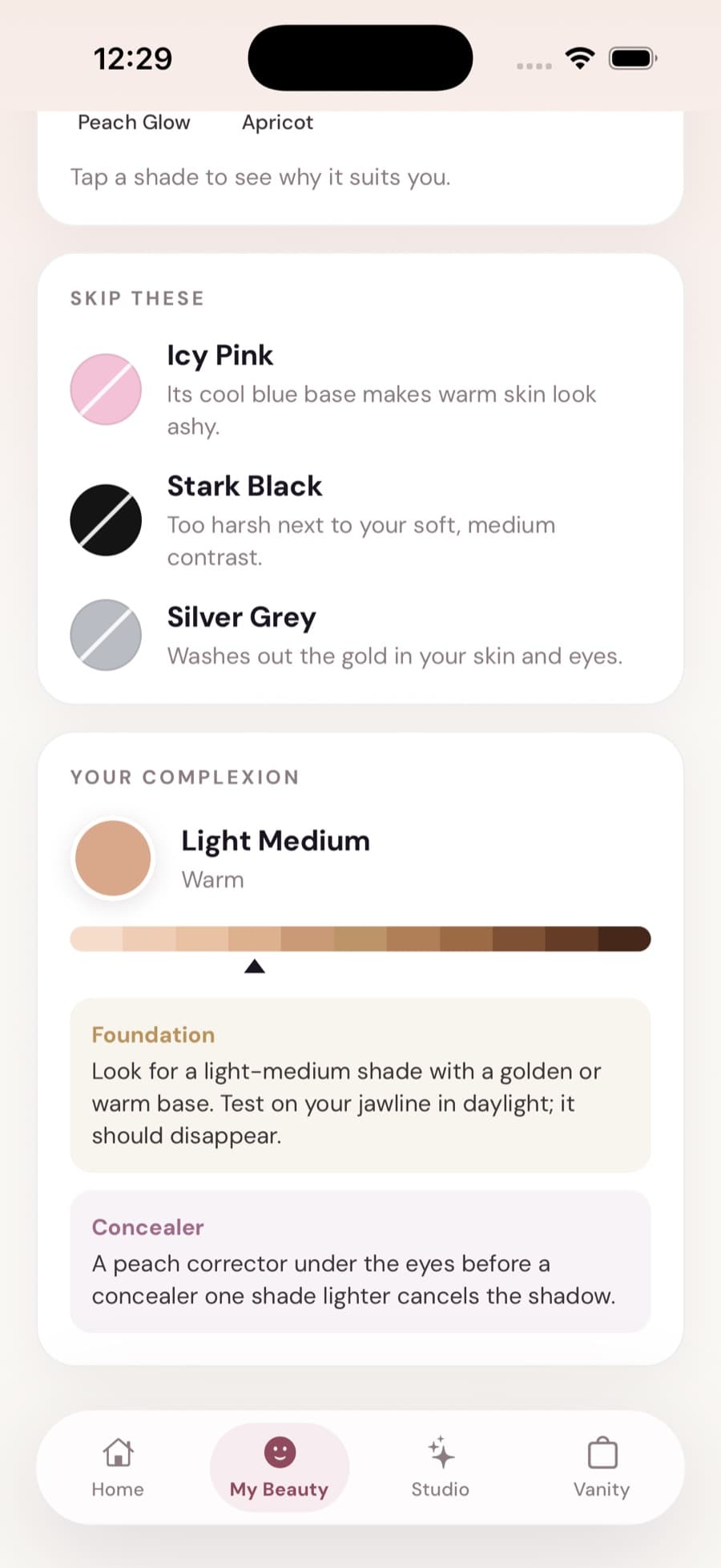
Glowmi’s face scan estimates visible coloring and suggests a color season and eye, lip, and cheek directions, plus colors to skip. These are suggestions to test, not a definitive undertone measurement or restrictions on what you can wear.
During onboarding you can see your season, a first shade, and your first look. Glowmi Pro unlocks the full experience afterward, with no free trial and fair daily and monthly AI usage limits. Glowmi is available on iOS; see the App Store for current plans.
Sources and further reading
Brand references describe their own methods and products. Our worked examples are illustrative, not records of product tests.
- M·A·C: foundation shade names and undertones
Explains M·A·C’s naming convention and why shade labels need a brand-specific interpretation.
- How Glowmi’s face scan works
Our app’s features and limits; this is product information, not independent validation.
Keep reading
Cool vs. Warm Blush: How to Match Blush to Your Undertone
Compare cool and warm blush on yourself, control amount and finish, and find a cheek-and-lip combination you enjoy without rigid undertone rules.
How to Find Your Foundation Shade Without Guessing
Find a foundation shade by comparing depth, undertone, and settled wear. Follow a jawline test and record what to change before buying again.
What Makeup Colors Suit Me? Build Your Personal Palette
Find eye, lip, and cheek colors you enjoy wearing together. See a Glowmi color-season example, compare real products, and build a personal makeup palette.