How to Find Your Foundation Shade Without Guessing
Match foundation by depth and undertone first, avoid common mismatches, and use Glowmi’s skin analysis as a smarter starting point.
The short answer
To find your foundation shade, match depth (how light or deep) first, then undertone (cool, warm, or neutral). Test along the jawline in daylight, and treat any app or store match as a starting range—not a guaranteed bottle across every brand.
Why foundation matching feels hard
Foundation fails for two separate reasons: the depth is wrong (too light or too deep), or the undertone is wrong (too pink, too peachy, or muddy). Fixing one without the other usually still leaves a mismatch.
Store lighting, filters, and swatching only on the hand make it worse. Your jawline in daylight is a better test than a hand swatch under fluorescent bulbs, but even that takes patience and returns.
Match depth first, then undertone
Depth is how light or deep the shade sits next to your bare skin. If the foundation disappears into your jaw and neck in natural light, depth is close. If it leaves a visible mask line, adjust depth before you blame undertone.
Once depth is close, check undertone. Cool foundations often lean pink or rosy; warm ones lean golden, peachy, or olive; neutrals sit in between. The wrong undertone can look ashy, orange, or dull even when the depth seems right.
Simple checks that save returns
Test along the jawline, blend a thin layer, and step into daylight. Check your neck and chest, not only your face, so the shade does not stop at your chin.
Give it a few minutes. Some formulas oxidize and look deeper or warmer after they set. If a shade looks perfect at the counter and wrong an hour later, oxidation or lighting was part of the story.
Keep notes on shade codes that almost worked. “Too peachy but right depth” is more useful than “didn’t like it” when you shop again.
How Glowmi helps you start smarter
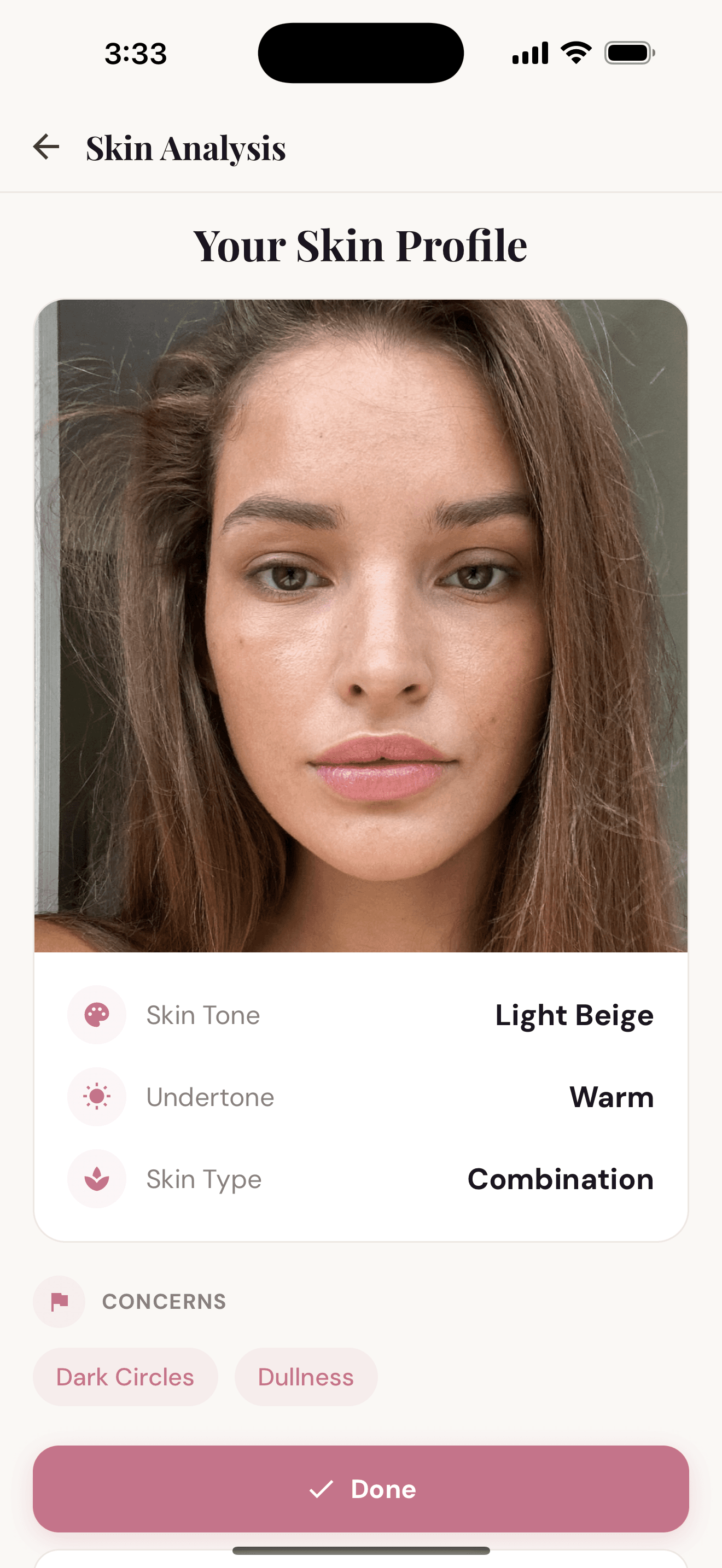
Glowmi’s Skin Analysis estimates visible tone and undertone from a bare-face selfie, then unlocks a personalized color palette. That profile is a starting brief for foundation shopping, not a guarantee of one exact bottle across every brand.
Use the analysis to narrow depth and undertone families, preview related looks with try-on when useful, and log winning foundation shades in your beauty journal so you do not relearn the same match every season.
Keep reading
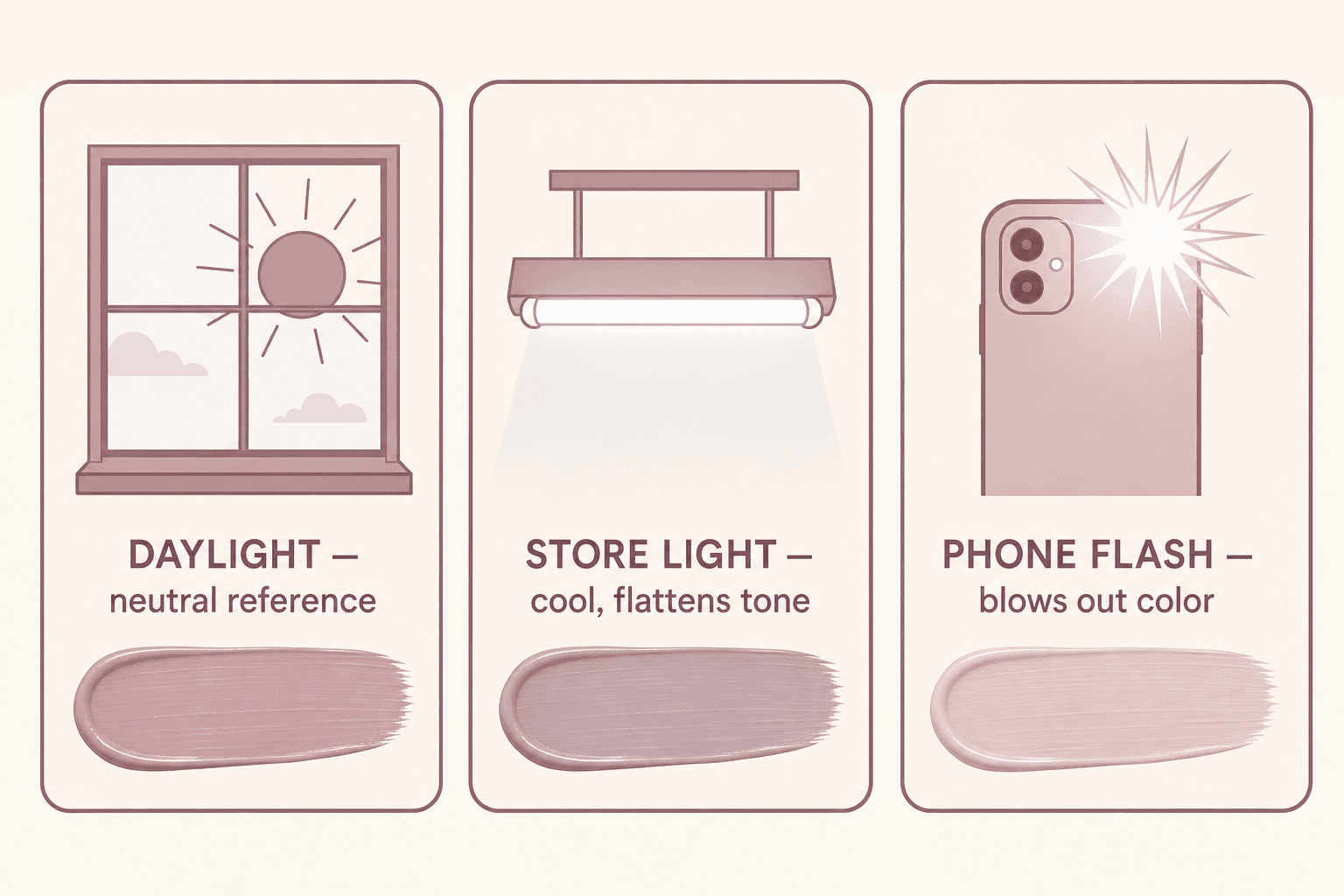
Why Your Foundation Looks Different in Daylight, Store Light, and Flash
The same foundation can look perfect at home and wrong in the store, or the reverse. Learn why daylight, indoor bulbs, store lighting, and phone flash change how a shade reads, plus a 5-minute test you can do before you buy.
What Is Skin Undertone? A Practical Guide for Makeup
Skin undertone is the cool, warm, or neutral hue under your surface tone. Learn how it differs from skin tone and how to use it when choosing foundation, blush, and lips.
How AI Skin Analysis Works for Makeup Guidance
AI skin analysis for makeup reads visible traits from a selfie—tone, undertone, type cues, and surface concerns—to suggest shades. It is not a medical diagnosis.