How to Build a Capsule Makeup Kit from Your Personal Palette
Edit your makeup into a small kit for the looks you repeat. Choose products by job, test a week of combinations, and buy only for a gap you can describe.
On this page
Choose two looks, then the products that make them
Build a capsule makeup kit around an everyday look and one variation. Start with products you own and keep the options that do a clear job. Your palette helps connect eye, cheek, and lip colors; your routine decides which products and tools belong in the kit.
Give each product a job
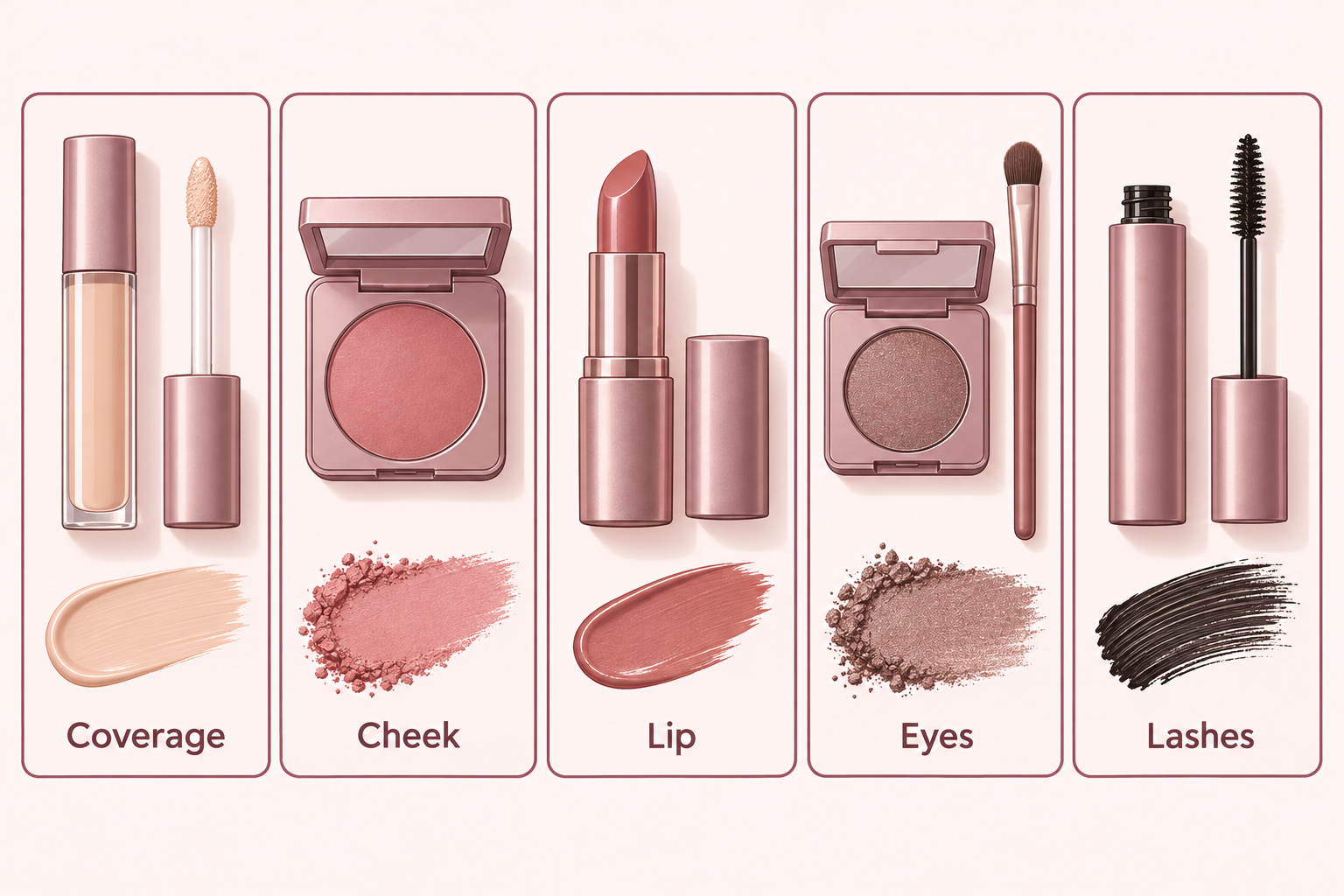
The illustrated five-product example contains concealer, blush, lipstick, one eye shadow, and mascara, plus an eye brush. It is one workable brief, not a required minimum. Keep the categories you use and omit the ones you do not.
- Coverage: the base or concealer that gives the result you want. Match it on your skin independently of the color palette.
- Cheeks: one color and formula you can apply reliably.
- Lips: an everyday shade; add a second only for a distinct look you regularly wear.
- Eyes: one main eye shade, with another defining shade if your second look needs it.
- Definition and tools: brow/lash products and clean applicators according to your routine.
Connect the eye, cheek, and lip
Choose a combination you already enjoy as the anchor for sorting. The examples below show color roles. Adjust their actual depth, finish, and amount against your own skin; they are not complete product lists or season assignments.
Explore the labeled color swatches
Rosy neutral
- Eye: taupe-brown
- Cheek: soft rose
- Lip: rosewood
Use the eye neutral for the main eye job and keep cheek and lip in related rose directions. Formula and finish can differ.
Warmer neutral
- Eye: warm brown
- Cheek: muted peach
- Lip: rose-terracotta
Connect a brown eye with muted peach and a rosy terracotta lip. Compare the warmth of each real formula.
Cooler definition
- Eye: plum-brown
- Cheek: muted mauve
- Lip: soft berry
Use a deeper eye accent with mauve cheek and berry lip directions. Control the amount to choose your focal point.
Test the kit for a week before shopping
Write two short briefs first, such as ‘quick everyday taupe eye and quiet lip’ and ‘the same eye with a defined lip.’ Include the time you want to spend and whether the kit travels.
- Set aside the chosen products where you get ready, keeping the rest of your collection available.
- Wear the everyday look on a normal day. Note which products you used and one source of friction.
- Repeat it, changing one troublesome product or step. Avoid replacing the whole combination at once.
- Try the second look using as much of the same kit as practical. Record any additional product that does a distinct job.
- At the end of the week, list repeated products, unused ones, and any job you could not complete. Buy only after you can describe the missing function, color, finish, or format.
Worked example: three nudes and one useful gap
Suppose a rosy-brown satin handles everyday coverage, while a sheer rose works when you want less color. A pale opaque peach needs a liner you rarely carry. Keep the two useful jobs in this kit and leave the peach in your larger collection.
If neither gives the deeper evening lip you want, write that gap precisely: ‘deeper rosy brown, easy to reapply.’ Use the lipstick test before shopping. A similar-looking product may still earn its place through a different finish or wear.
Check condition and intended use
Follow labels, keep containers clean and closed, and discard products with a changed smell or color. A matching shade does not make lip or cheek makeup suitable for eyes; use multi-use products only as their labeling permits.
When something runs out, replace its actual job. You may already own another option, or a different application may give the variation you want.
Connect your palette with your products in Glowmi
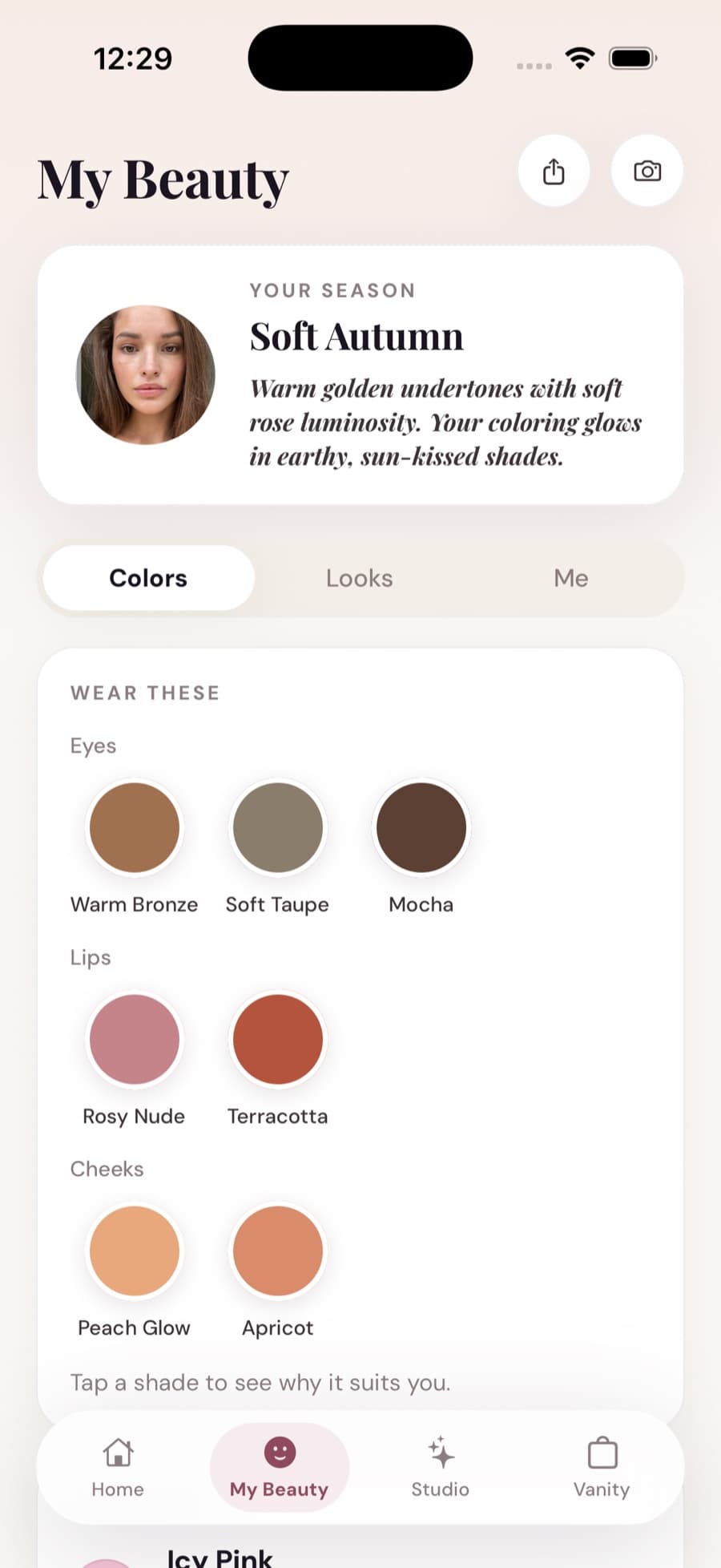
Use your Glowmi Beauty Profile to shortlist colors, compare the real products, then save the successful combinations in Vanity. Connect a broad direction such as rosy brown with an exact product, amount, and result.
Glowmi is on iOS. Onboarding shows a season, first shade, and first look. Pro unlocks the full experience afterward, with no free trial and daily/monthly AI limits. See the App Store for current plans.
Sources and further reading
Brand references describe their own methods and products. Our worked examples are illustrative, not records of product tests.
- FDA: using cosmetics safely
Supports following labels, keeping products clean and closed, and discarding products with changes in smell or color. Our kit-editing exercise is editorial guidance.
- FDA: eye cosmetic safety
Supports using only cosmetics intended for the eye area. Color versatility does not establish safe use on another area.
- Glowmi: what the app includes
Describes Vanity’s product and saved-look records. A digital inventory does not establish a cosmetic’s condition or suitability.
Keep reading
What Makeup Colors Suit Me? Build Your Personal Palette
Find eye, lip, and cheek colors you enjoy wearing together. See a Glowmi color-season example, compare real products, and build a personal makeup palette.
Beauty Journal Tips: Track Products and Looks That Work
Keep useful product and makeup-look notes with a simple journal template, a one-minute entry, and a repeatable way to review what works for you.
How to Find Your Foundation Shade Without Guessing
Find a foundation shade by comparing depth, undertone, and settled wear. Follow a jawline test and record what to change before buying again.