How to Choose Lipstick for Your Undertone
Find a useful lipstick direction by comparing temperature, depth, and coverage on your lips. Includes warm, cool, neutral, and olive starting points.
On this page
Choose a pair, then compare it on your lips
For a first comparison, explore peachier rose if you prefer warmth, or mauve rose if you prefer cooler colors. Then adjust depth and coverage on your actual lips. Undertone narrows a starting pair; the finished look also depends on natural lip color, formula, and how much you apply.
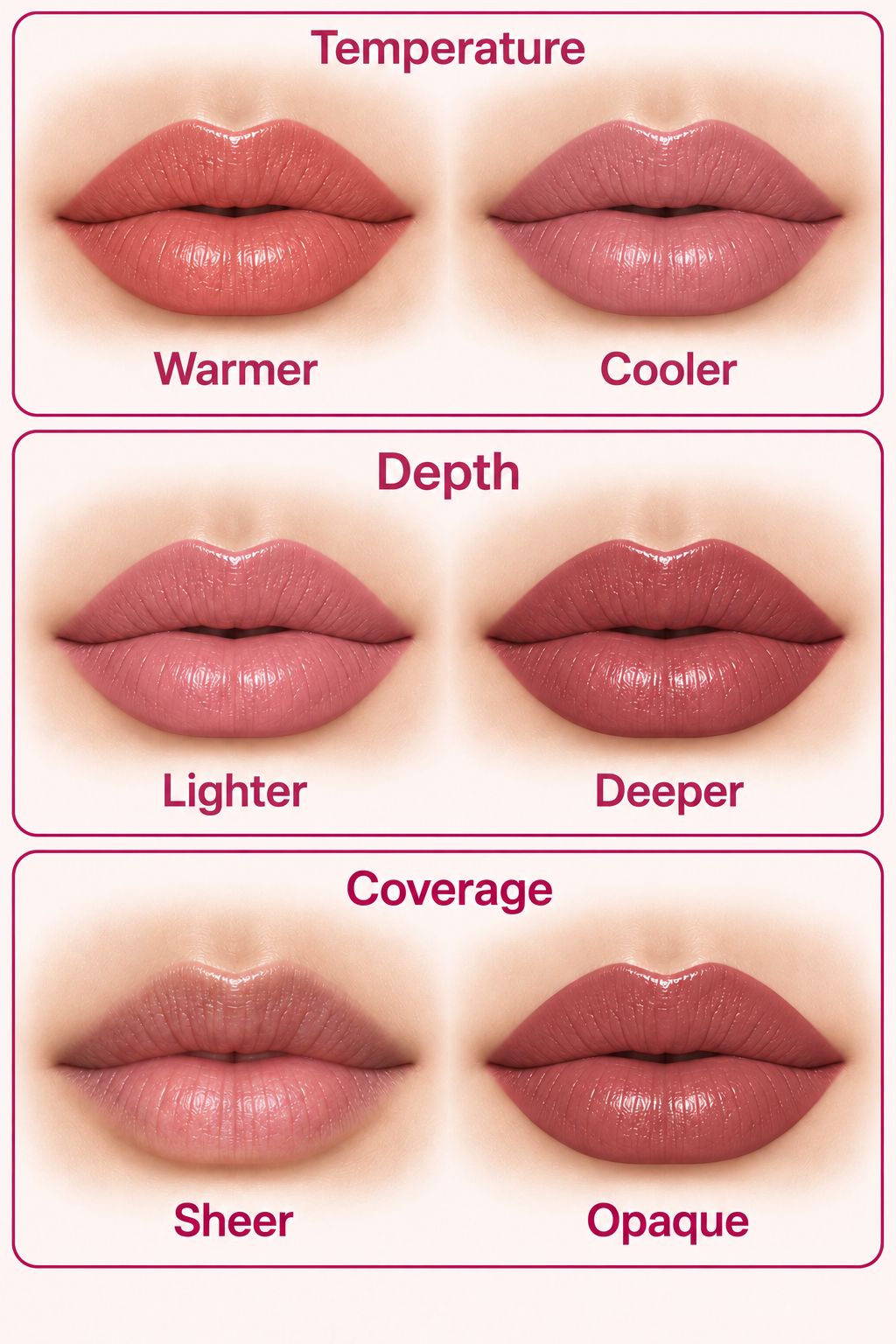
Change one difference at a time
A sheer lipstick lets more natural lip color show through; an opaque one changes the contrast at the lip edge. A wrist swatch can shortlist colors, but the background differs from your lips. Compare similar finishes and depths before deciding that warmth is the problem.
- Warm-leaning: compare peachy rose with a more neutral rosy brown.
- Cool-leaning: compare mauve rose with neutral rose.
- Neutral or undecided: compare two roses at similar depth, one peachier and one more mauve.
- Olive coloring: try muted rose-brown against clearer rose. Check depth and coverage too; olive does not automatically determine a warm/cool preference.
Explore the labeled color swatches
Too warm?
- Peach rose
- Mauve rose
Keep a similar depth while comparing warmer rose with cooler rose.
Too pale?
- Pale rose
- Deeper rose
Try a deeper related shade before changing the color family.
Too vivid?
- Clear berry
- Muted berry
Compare a clearer berry with a softer, browner variation.
A repeatable lipstick test
Use your own products or hygienic samples. Avoid applying a shared tester directly to your lips.
- Choose the job: quiet everyday lip or a more defined focal point. Keep one familiar lipstick as a reference.
- Select a pair with similar depth, finish, and coverage. Change mainly temperature. Record any formula differences.
- Keep base, blush, lighting, and lip preparation similar. Apply the first color at your normal amount and look at the whole face in indirect daylight.
- Remove it gently, let temporary color from removal settle, and try the second across both lips. Name the change you want: less orange, more depth, or a softer edge.
- Test coverage or depth next. Blot the preferred color or compare a deeper related shade. Record wear and texture separately from the initial color.
Worked example: a nude lipstick looks chalky
Suppose an opaque peach-beige looks much lighter than your lips and leaves a stark edge. An equally pale cool pink may keep the same problem. First compare a deeper related color in a similar finish, or try a thinner layer of the original.
M·A·C’s artist guidance includes pairing pale pink with a deeper liner to change the transition. Use that option if you enjoy it; you do not have to rescue a color you dislike. This example separates depth and coverage from temperature.
Match the adjustment to the visible problem
‘Does not suit me’ is difficult to act on. Choose one observation before changing products.
- Too orange: compare a less peachy rose at a similar depth.
- Too pale or disconnected: compare a deeper related shade or less opaque coverage.
- Too bold: try less product and a softer edge, then consider a more muted color.
- Uneven: assess preparation and formula separately; extra pigment will not fix every texture issue.
Save a brief you can use across brands
Record product, shade, depth compared with your lips, finish, amount, and the next change. For example: ‘Rosy-brown satin, one layer, indirect daylight; depth works, prefer less peach.’ Shade names such as nude and rose are not standardized across brands.
Keep the eye and cheek similar while testing the lip. The eyeshadow guide helps build a supporting combination; the season guide organizes a broader palette.
Use Glowmi to see the broader palette
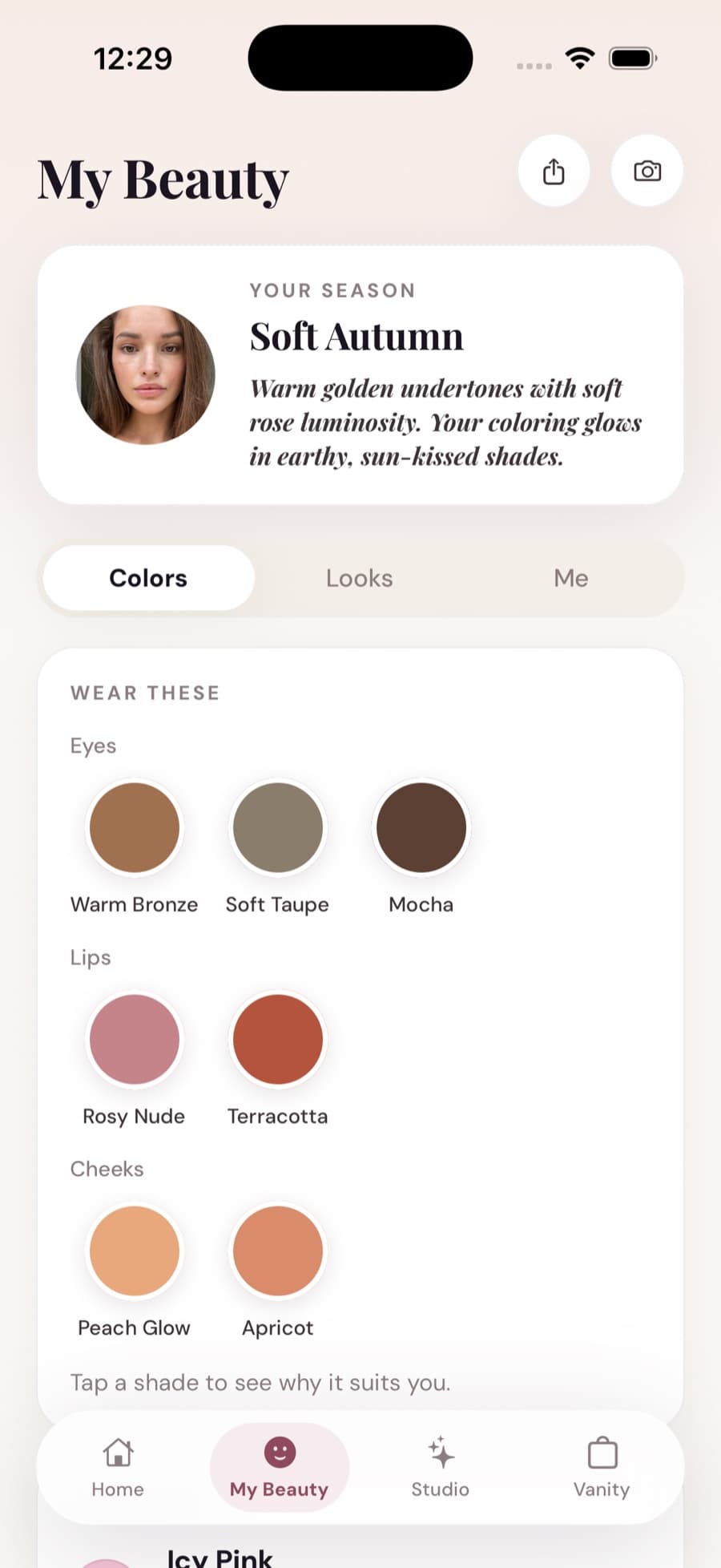
Glowmi suggests lip, eye, and cheek directions together. Use its palette to shortlist a comparison, then confirm the real lipstick on yourself.
Glowmi is on iOS. Onboarding shows a season, first shade, and first look. Pro unlocks the full experience afterward, with no free trial and daily/monthly AI limits. See the App Store for current plans.
Sources and further reading
Brand references describe their own methods and products. Our worked examples are illustrative, not records of product tests.
- M·A·C: how to wear pale pink lipstick
An artist describes warm and cool pink options, sheer finishes, and using a deeper liner with pale pink. These are brand-specific styling suggestions, not universal shade matches.
- M·A·C: virtual try-on
Describes the brand’s lipstick preview tool. A virtual preview helps shortlist a color direction; our article does not treat it as a physical wear test.
- Glowmi: how the face scan works
Describes Glowmi’s complexion and shade guidance and its photographic limits; this is our product information, not independent validation.
Keep reading
What Is Skin Undertone? A Practical Guide for Makeup
Understand undertone versus skin depth, compare real swatches, and turn mixed results into useful shade notes without relying on one shortcut.
Cool vs. Warm Blush: How to Match Blush to Your Undertone
Compare cool and warm blush on yourself, control amount and finish, and find a cheek-and-lip combination you enjoy without rigid undertone rules.
What Makeup Colors Suit Me? Build Your Personal Palette
Find eye, lip, and cheek colors you enjoy wearing together. See a Glowmi color-season example, compare real products, and build a personal makeup palette.